
JPE Industry Insights | What are the Common Causes of Check Valve Failure?
2026-04-23
Industry Knowledge Popularization
In fluid systems, check valves rely on fluid pressure to open, ensuring the normal flow of media. When the flow stops or backpressure occurs, the valve's mechanical structure automatically closes, effectively preventing media backflow within the pipeline.
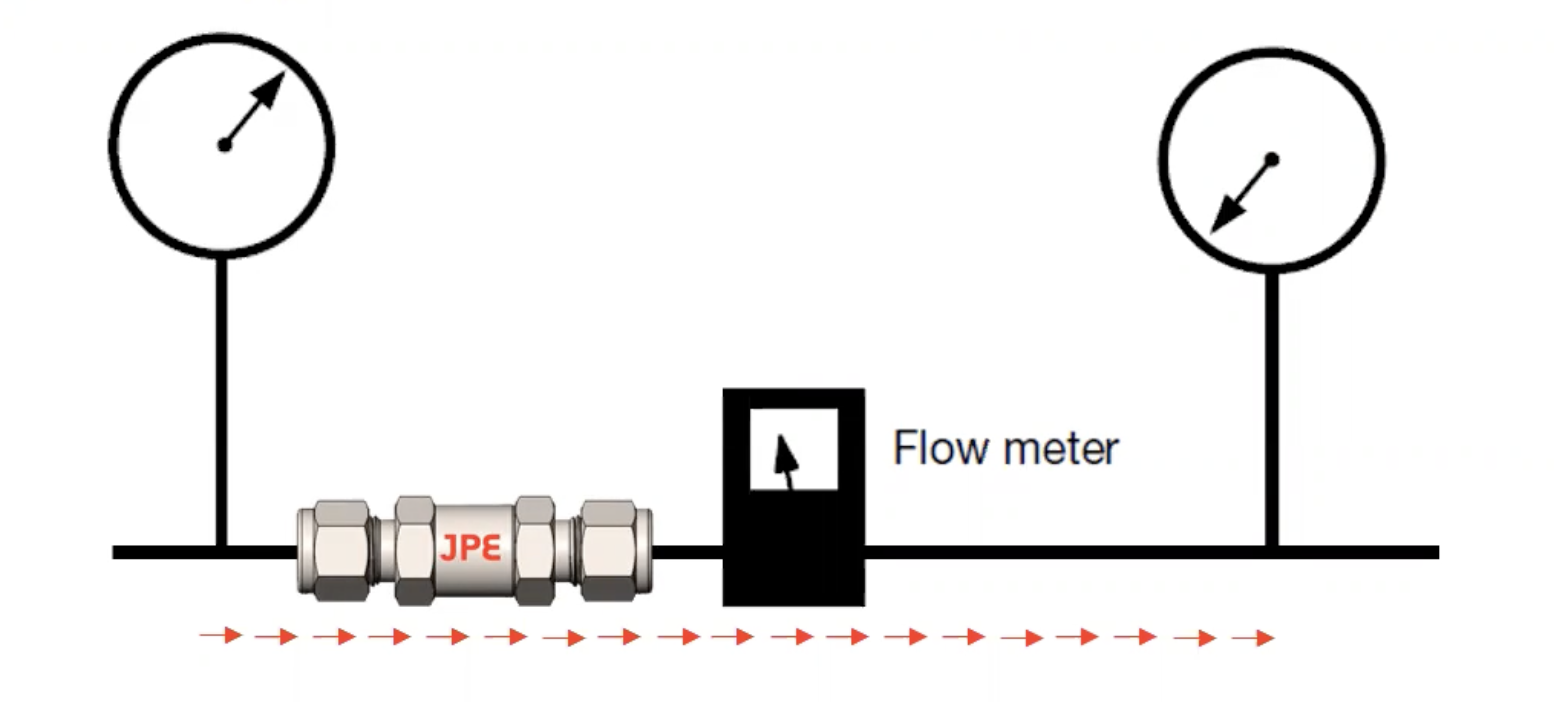
Typically installed in pressurized fluid systems, the primary function of a check valve is to prevent backflow, which is why they are also known as non-return valves. It is essential to select a check valve with sealing materials compatible with the specific media and operating conditions to ensure long-term system stability.
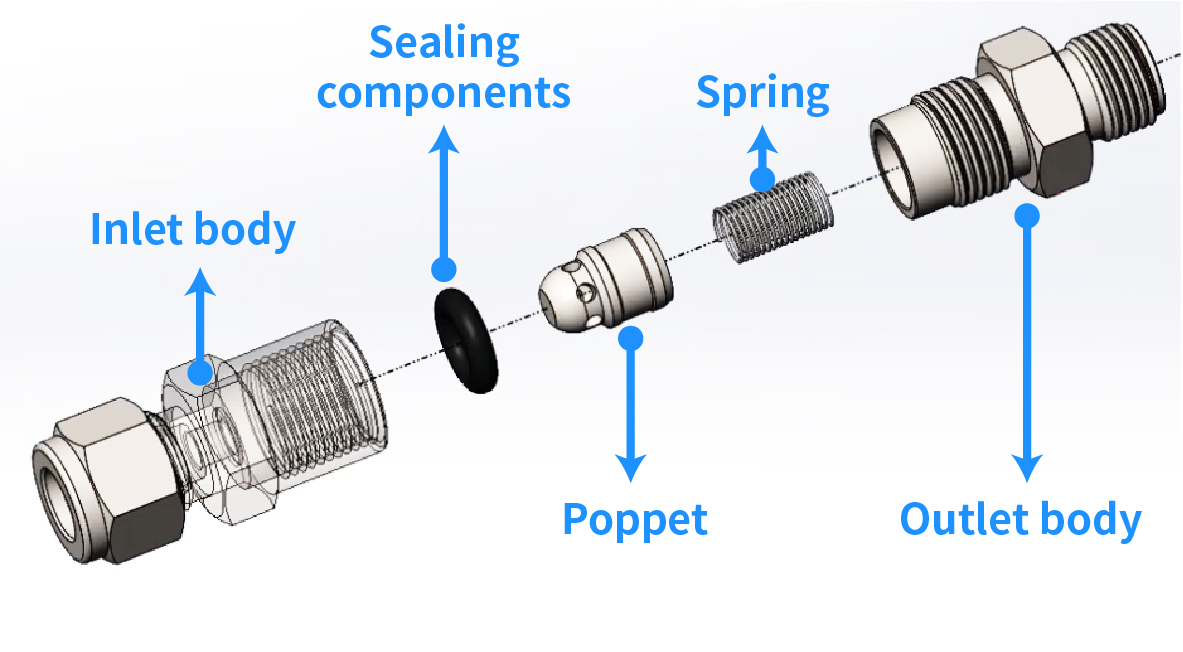
While lift and swing check valves are common in general piping, JPE specializes in the R&D and production of instrumentation-grade check valves. These valves feature a compact, streamlined design, primarily consisting of the valve body, spring, poppet, and seals.
The installation and operation of check valves involve several critical technical details, particularly regarding seal integrity.
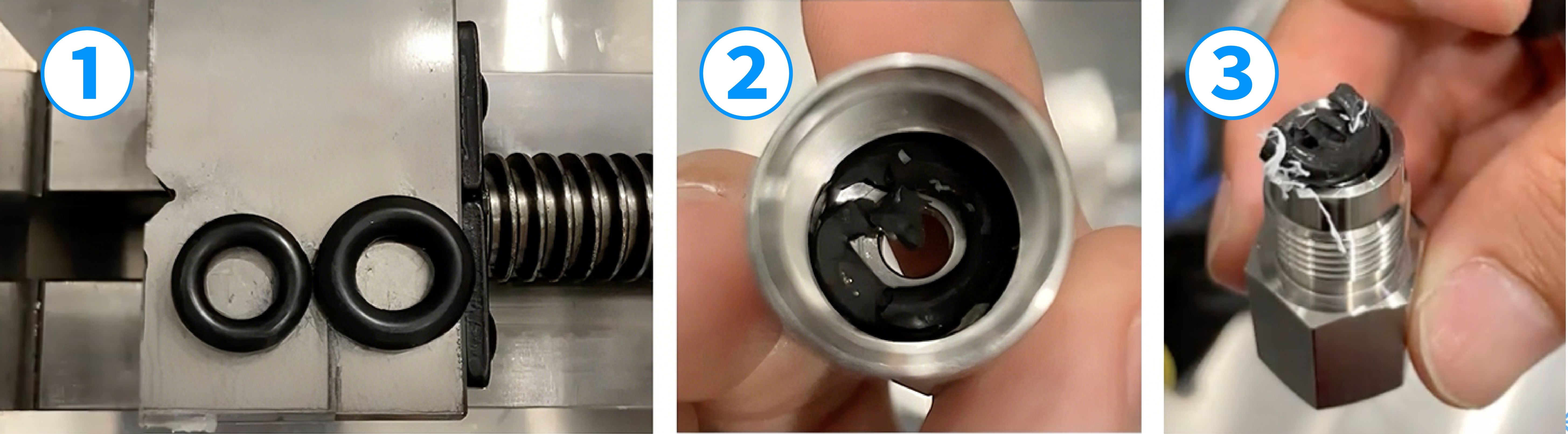
The image above illustrates common issues resulting from improper application:
1. Left: Normal seal; Right: Swelling/Expansion
2. Degradation and embrittlement
3. Degradation/embrittlement and ingress of foreign contaminants
Exposure to incompatible media or extreme conditions can cause seals to swell, become brittle, or lose elasticity, compromising the valve's functionality. Below are explanations for two common installation and operational challenges:
I. Metallic Chattering or Hammering Noise
Cause: The flow rate is too low, causing the poppet to oscillate rapidly between the open and closed positions.
Solutions:
1. Replace with a spring that has a lower cracking pressure.
2. Increase the flow rate and pressure until the system stabilizes, then adjust back to the required operating parameters.
II. Gravity-Induced Opening in Vertical Installations
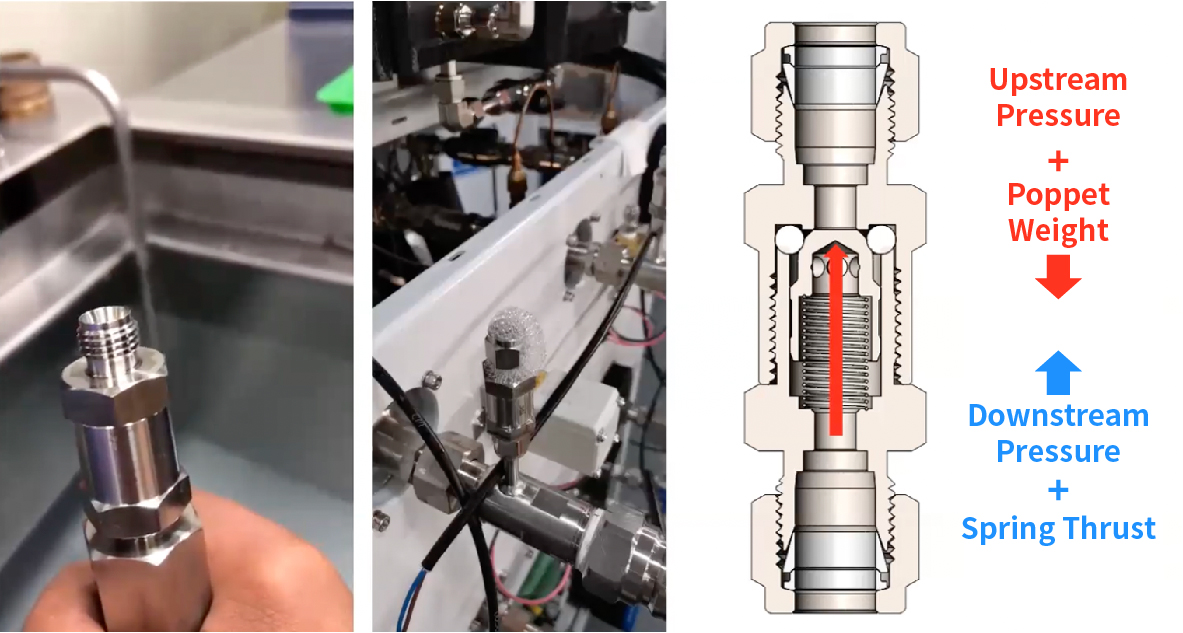
Cause: Due to the weight of the poppet, the valve may fail to seal properly if the backpressure is insufficient to overcome gravity.
Solutions:
1. Reorient the valve for horizontal installation.
2. If vertical orientation is required, select a product with a customized cracking pressure (increased spring tension) to compensate for the lack of backpressure.
A common misconception in the industry is the use of check valves as safety relief devices. This is incorrect. Check valves are designed specifically for unidirectional flow control and are not a substitute for safety relief valves.
Proper selection and application of check valves are vital for the safety and efficiency of fluid systems. For more technical details or product information, please contact the JPE team for professional consultation and support.
