

JPE Expert Techniques How to use Thread Sealant and Thread Sealant Tape
Although the principle and tools sound simple, in practice there are still many subtle tricks. For masters who can finish perfectly while chatting with ease, it is not merely luck they rely on. Therefore, in this article, we provide a detailed introduction to the use of thread sealant and sealant tape, so that users can quickly get started in daily operations and effortlessly become industry experts.
Introduction to Using Thread Sealant
Before applying sealant in the usual way, the following proper tools should be prepared:
Tool list
From left to right: bamboo stick, activator, sealant, cleaning brush, wrench, and vise.
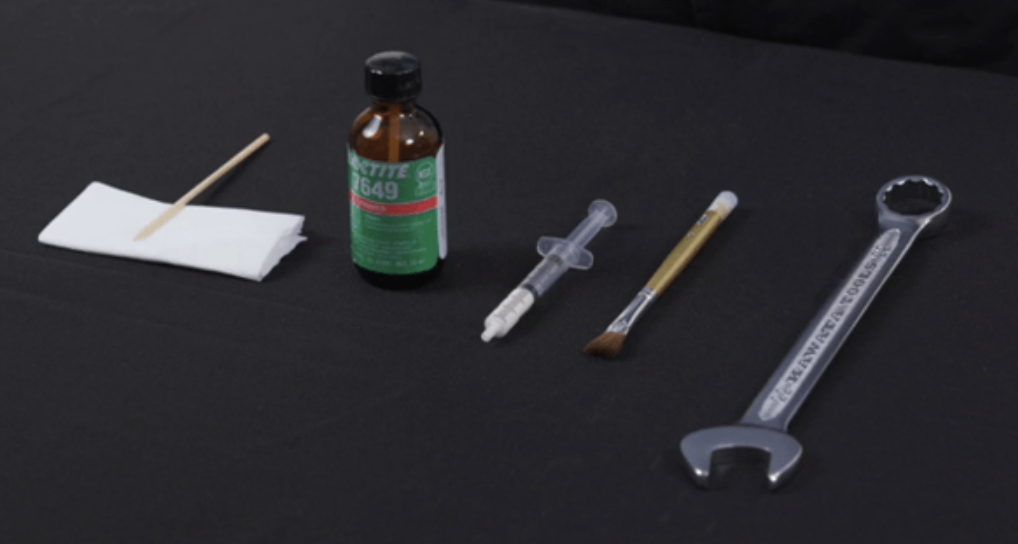
At the same time, the following steps should be followed:
1. Make sure the thread area is clean and dry. Depending on the material of the thread, decide whether to apply activator.
2. Apply sealant starting from the first thread, covering 4 to 5 threads.
3. Use a bamboo stick or similar tool to press the sealant in the direction of the threads into the grooves (between thread peaks and valleys), while squeezing out residual air.
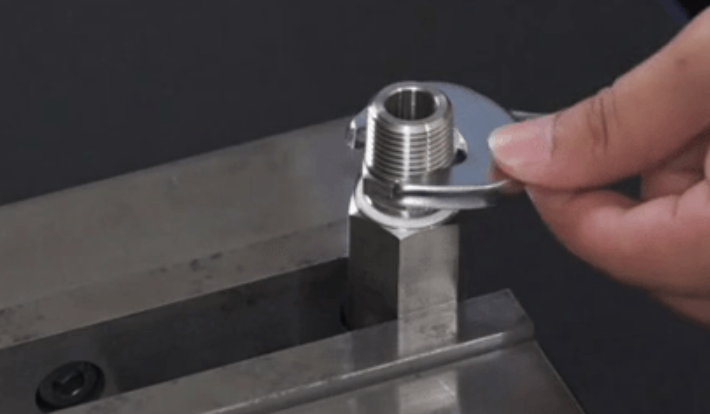
4. Tighten the fitting, let it sit for 1–2 hours until the sealant has cured before pressurizing the system.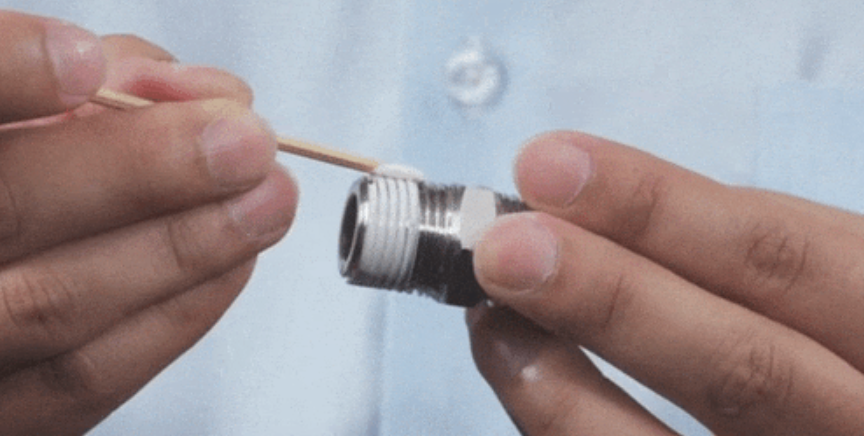
Introduction to Using Thread Sealant Tape
Next, before applying sealant tape, you also need to have the proper tools prepared, and then complete the task according to the following steps:
Tool list
From left to right: sealant tape, wrench, cleaning brush, and vise.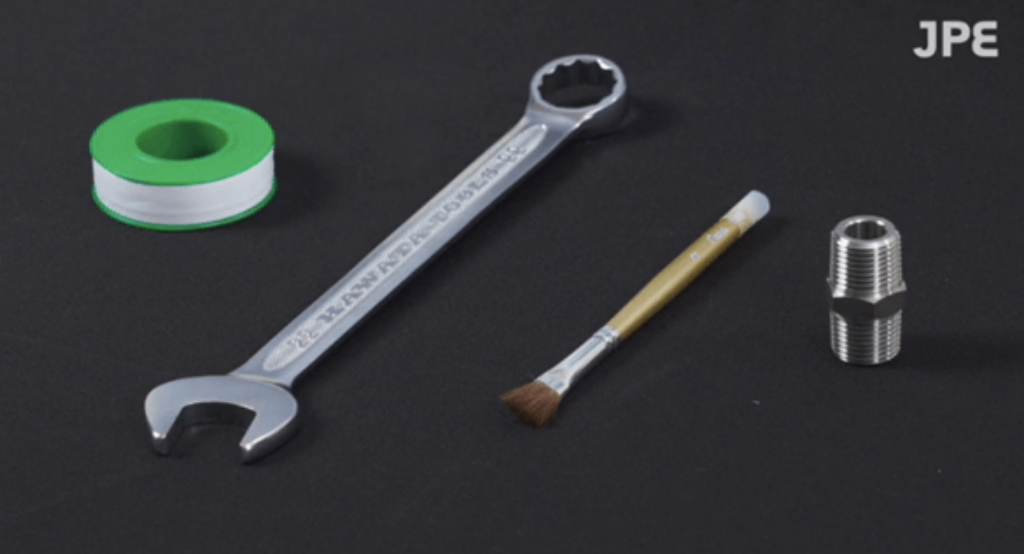
Usage steps
1. Use a cleaning brush to clean the thread surface.
2. Wrap the sealant tape following the thread’s rotational direction from bottom to top, making 5–7 turns (using 0.1mm-thick tape as an example).
3. Tighten the wrapped joint by hand, then use a wrench to fully tighten before pressurizing the system.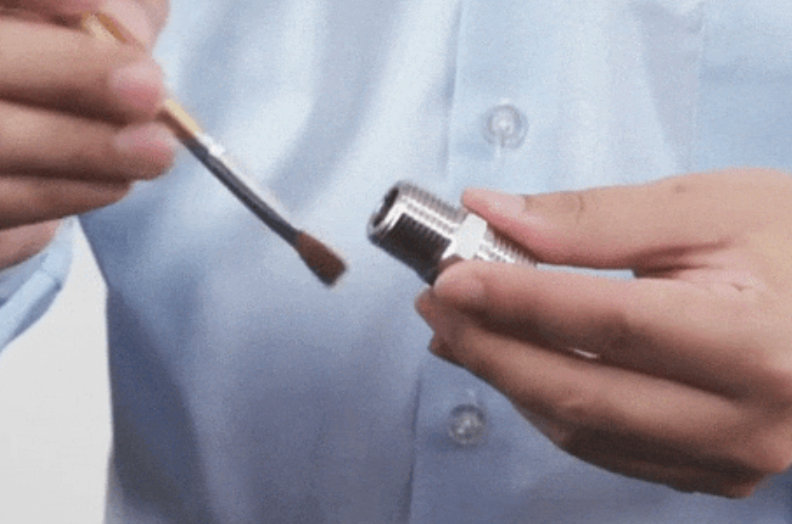
In addition to using the correct tools and following the correct procedures, some operational details will also determine whether fluid leakage occurs. Therefore, users should carefully pay attention to the following important points:
• Confirm whether the threads meet specifications.
• Parallel (straight) threads are not designed for sealing; do not attempt to seal them by applying sealant or wrapping tape.
• Do not apply excessive sealant that spills into the thread root, as it may flow into the pipeline and contaminate the system medium.
• The curing time of sealant should follow the specific instructions of each manufacturer.
• Sealant tape should always be wrapped in the thread’s direction from bottom to top, never in reverse.
• Adjust the number of wraps according to the tape thickness; do not make it overly tight or overly loose.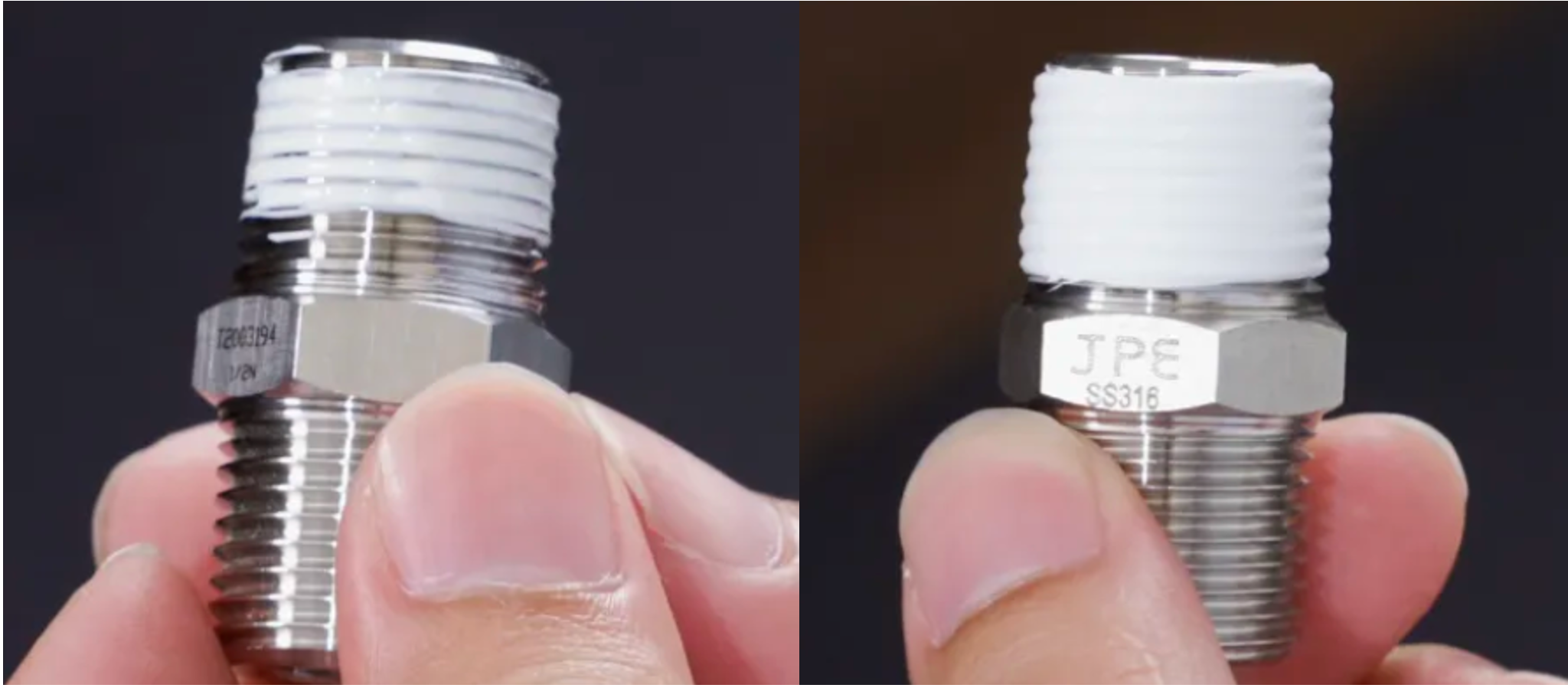
(Illustration) From left to right: sealant, sealant tape.
What appears to be a simple process actually requires attention to many details and skills. Proper use of sealant and sealant tape can minimize the probability of leakage at joints, avoid public safety risks, and improve work efficiency.
Providing reliable product quality to customers has always been JPE’s fundamental mission. We look forward to sharing our products and technical knowledge through open and transparent information, benefiting more professionals and corporate users, and advancing together toward success. For the complete video on how to correctly use sealant and sealant tape, please click the short film below for more detailed information.
『JPE Classroom』