
JPE Product Spotlight | How to Select Quick Couplings?
In modern industrial piping systems, quick couplings are key components for achieving high operational efficiency. Whether for pneumatic tools, chemical processing, or high-pressure gas transmission, selecting the right quick coupling not only boosts productivity but also serves as the primary line of defense for industrial safety and leak prevention.
Based on JPE’s professional technical data, this article provides an in-depth analysis of quick coupling structural principles, the differences between single and double valve designs, and a detailed selection guide.
01. Primary Industries for Quick Coupling Applications
1. Petrochemical / Oil & Gas
Oil and gas transmission, instrumentation lines, hydraulic control systems, and gas pipelines.
2. Semiconductors / Electronics
High-purity gases, specialty fluids, equipment cooling, and vacuum systems.
3. Pneumatic & Hydraulic Equipment
Air compressors, pneumatic tools, hydraulic stations, fixtures, and automation equipment.
4. Machinery / Machine Tools
Cooling systems, lubrication systems, mold-change systems, and testing equipment.
5. Automotive / New Energy Vehicles
Pneumatic and hydraulic lines for production lines, refrigerants, and battery equipment.
6. Instrumentation / Testing Equipment
Pressure gauges, sensors, leak detection equipment, and test benches.
7. Biopharmaceuticals / Food & Beverage
Clean fluids, sanitary piping, and sterile connections.
8. Power & Energy / Solar Photovoltaics
Power plant instrumentation, gas control, cooling systems, and PV equipment.備
9. Shipbuilding / Heavy Machinery
Marine hydraulics, pneumatic systems, construction machinery, and mining equipment.
10. Industrial Gases / Welding
Quick connection for oxygen, acetylene, nitrogen, argon, and other gases.
02. Operating Principles and Valve Structures
The core value of a quick coupling lies in the ability to "quickly connect or disconnect a pipeline without tools." Depending on the internal valve design, they are categorized into three main types, which determine how fluids are sealed or flow:
1. Single Valve Type
Representative Series: JPE NL Series
Structural Principle: A valve is located only in the Socket (female side); the Plug (male side) is straight-through.
Operation:
• Disconnected: The socket valve closes automatically to prevent fluid outflow; the plug side has no valve, so residual fluid will drain out.
• Connected: The plug is inserted to push open the socket valve, enabling flow.
Applications: Air, water, oil, etc., where the flow must move from the socket to the plug. Commonly used in pneumatic tools and air lines.
2. Twin Valve Type
Representative Series: JPE KS Series, QC Series
Structural Principle: Both the socket and the plug are equipped with internal valves
Operation:
• Disconnected: Valves on both sides close independently, sealing both the socket and the plug to prevent leaks.
• Connected: Both valves push against each other to open, forming a flow path.
Applications: Chemical machinery, high-pressure gases, and even acidic/alkaline liquids or steam where leaks are strictly prohibited.
3. Non-Spill Flat Face Type
Representative Series: JPE NS Series
Structural Principle: Features a specialized flat-face valve design.
Applications: Chemical processes, semiconductor manufacturing, or highly corrosive media in environments with extreme requirements for cleanliness and safety.
03. Comparison of Common Industrial Quick Coupling Series
According to JPE technical specifications, different application scenarios require specific coupling series. Below is a comparison of key parameters:
04. Key Selection Factors: Materials and Seals
When choosing a quick coupling, "Chemical Compatibility" is the decisive factor for service life, alongside size and pressure. You must select the appropriate body and O-ring materials based on your fluid medium.
1. Body Material Selection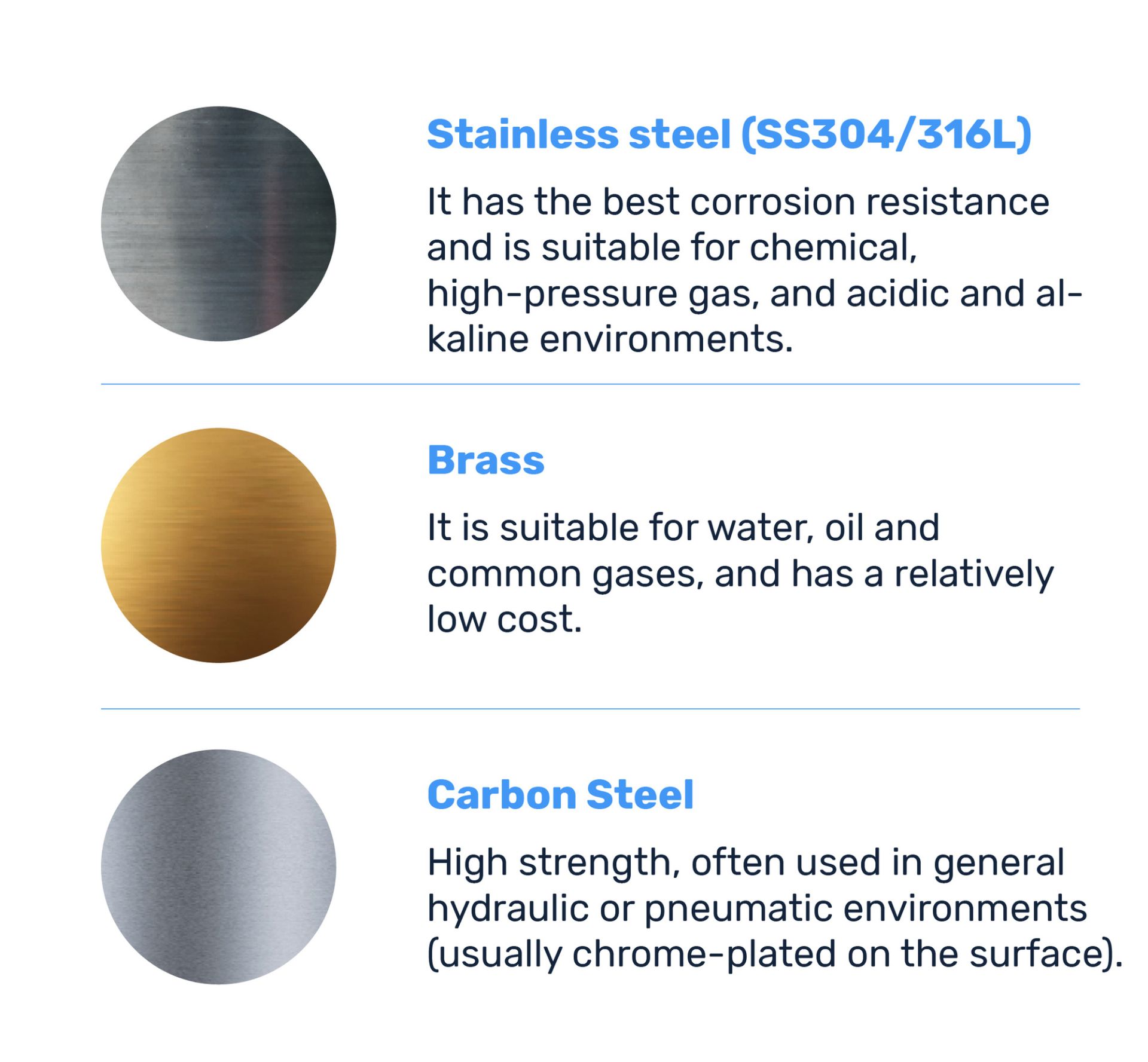
2. Seal (Packing Material) Resistance Guide
Based on JPE laboratory data, the suitability of various rubber materials is as follows:
NBR
Recommended: Mineral oil, water, alcohol.
Not Recommended: Acidic fluids, high-temperature environments (Max 100°C).
EPDM
Recommended: Water, steam, ketones, alcohols, acidic/alkaline liquids.
Not Recommended: Mineral oils, fuel oils (poor oil resistance).
FKM
Recommended: High temperatures (up to 200°C), mineral oils, fuel oils, acidic fluids, silicone oil.
Note: Limited resistance to certain alcohols and alkaline liquids.
FFKM
Recommended: Nearly universal; extreme heat and chemical resistance for the most demanding processes.
05. Safe Operation and Maintenance Recommendations
To extend the lifespan of your quick couplings and ensure operator safety, please adhere to the following guidelines: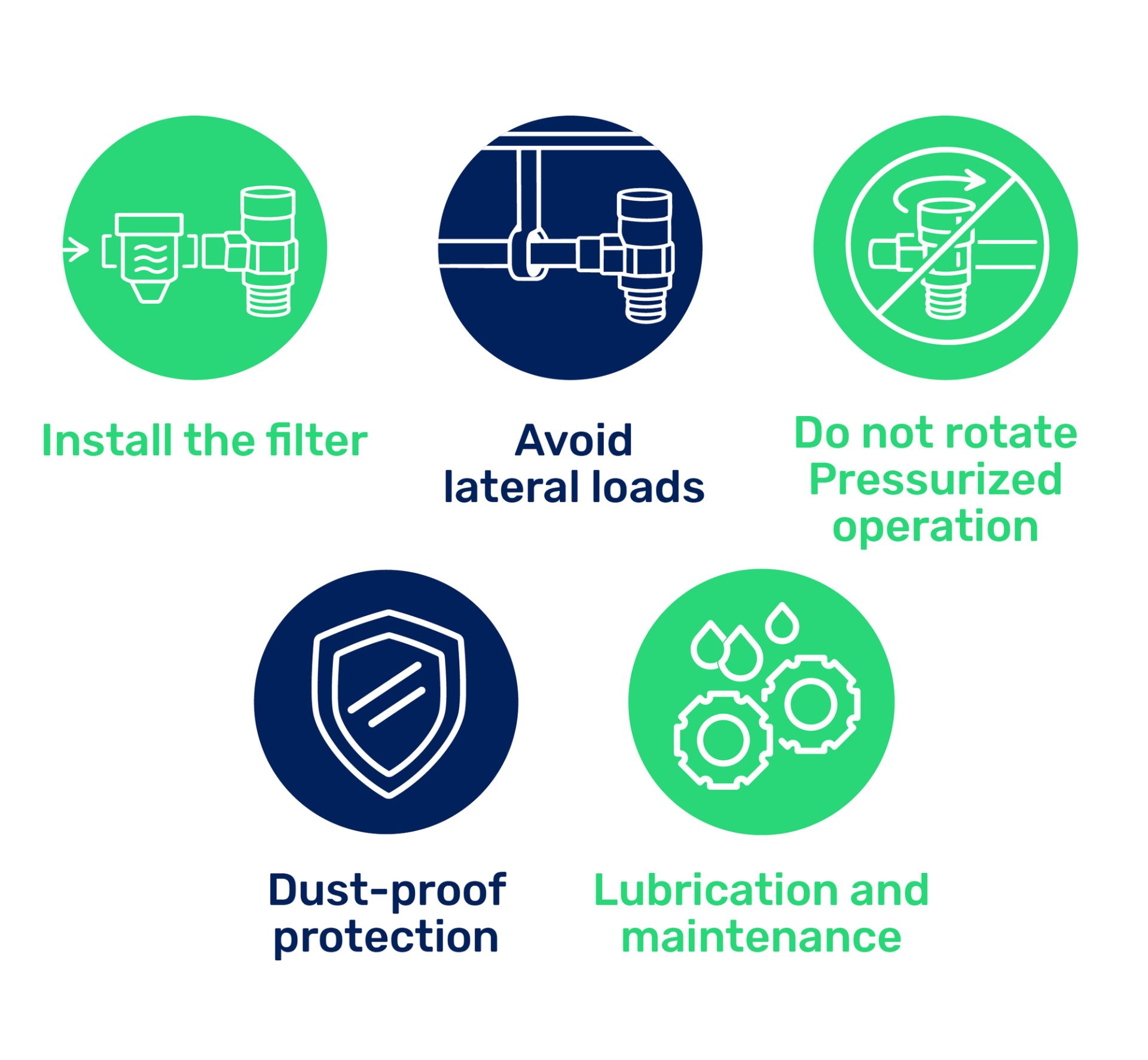
Install the filters:
It is recommended to install a filter upstream of the quick coupling to prevent debris from entering the valve and causing seal failure.
Avoid lateral loads:
Pipelines should be properly supported or suspended after connection to prevent "Side Loading," which can cause coupling deformation or leakage.
Do not rotate Pressurized operation:
• Do not rotate the quick coupling while it is in a connected state.
• Do not forcibly disconnect straight-through (unvalved) couplings while the system is pressurized.
Dust-proof protection:
Use dust caps (protectors) when disconnected to prevent contamination.
Lubrication and maintenance:
Periodically apply lubricant to the O-rings inside the socket to ensure smooth connection and airtight performance.
06. Conclusion and Actionable Advice
Selecting the right industrial quick coupling requires a comprehensive evaluation of fluid type, working pressure, operating temperature, and valve structure.
JPE provides a full range of solutions—from basic pneumatics to high-precision instrumentation and chemical leak prevention — with various material options to meet rigorous industrial demands
Need detailed dimensional drawings or custom material specifications?
Please refer to the complete JPE product catalog or contact our professional sales representatives for the best technical advice.