
JPE Product Spotlight | Mastering Common Industrial Valves: A Selection Guide for Ball and Needle Valves (Part III)
2026-01-23
Featured Products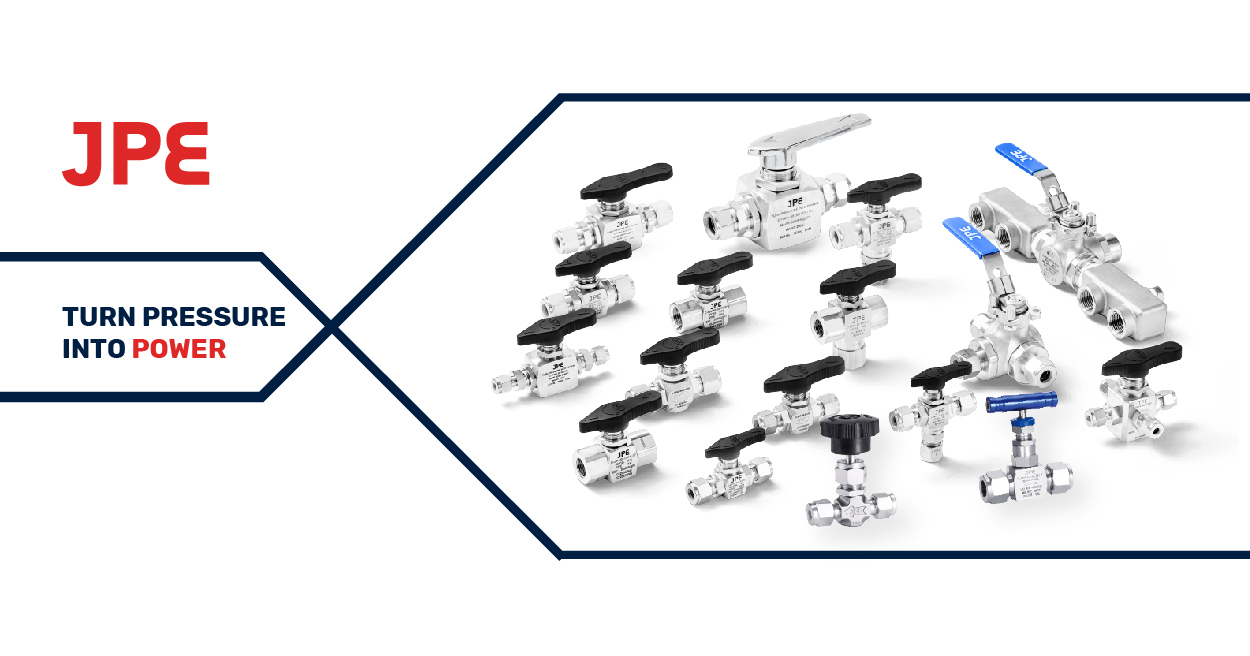
How to Select Ball and Needle Valves for Fluid Systems: Specification Comparisons and Purchasing Guide
When purchasing ball valves and needle valves, it is recommended to focus on the following points to select the most suitable products and avoid common selection pitfalls:
01. Clarify Operating Conditions and Requirements
First, filter for valves that meet the required ratings based on the system's pressure, temperature, and media properties. Never compromise safety by choosing a valve with an insufficient pressure rating to save costs (e.g., using a 1000 psi rated ball valve in a 2000 psi system), as this creates serious safety hazards. Conversely, using high-pressure valves for long-term low-pressure applications may shorten the lifespan of seals or result in unnecessary costs; a balance must be struck.
Regarding temperature, ensure the valve materials remain suitable at the maximum operating temperature. If long-term throttling is required at high temperatures, designs resistant to high heat, such as those with graphite packing or metal seals, should be used. Regarding media, consult the supplier to ensure the valve body and seal materials can withstand corrosion from the medium (e.g., avoiding rubber seals that swell in strong acids, or PTFE which may experience cold flow with certain solvents).
02. Correct Connections and Sizes
When purchasing, ensure the valve connection type and size match the piping requirements, including thread specifications (NPT vs. BSP, Male or Female) or Metric/Imperial tube fitting sizes. Ignoring this may lead to installation mismatches, the need for on-site adapters, or increased risk of leakage.
To guarantee the best results, it is recommended to select valves with end connections that are identical to the system’s connections. JPE offers a complete range of specifications; please carefully check the connection codes in the model numbers when placing orders, and request technical support from the supplier if necessary.
03. Note Functional Differences
Avoiding misapplication is a key factor in selection. For instance, some users mistakenly believe needle valves can be used for quick opening and closing; in reality, needle valves are not suitable for use as frequent on/off switching valves. Conversely, ball valves should not be used for fine flow regulation; leaving them in a semi-open state for long periods can damage the valve seat. Additionally, for three-way ball valves (though not the main focus here), there are differences between L-port and T-port flow paths, so the correct type must be selected for line switching.
Before purchasing, be sure to clarify the operational function: Is it just for On/Off control, or is Flow Regulation required? Use this to decide between a ball valve and a needle valve.
04. Consider Operation and Maintenance
Decide whether locking handles or remote actuators are needed based on the installation location and automation requirements. For outdoor or high-altitude pipelines, the remote control capabilities of pneumatic valves can improve safety. JPE ball valves can be equipped with various actuators; inquire about compatible models when purchasing.
regarding maintenance, if the system requires replacing valve internals without interrupting operation, consider designs that are easy to disassemble, such as 3-piece ball valves or union bonnet needle valves, to facilitate the quick replacement of seats or packing.
Furthermore, understanding the supplier's testing and certification is crucial: JPE products are all ISO 9001 certified and undergo strict testing before leaving the factory. You can request test reports or material certificates from the supplier to ensure product reliability.
05. Do Not Overlook Special Requirements
Certain special applications require additional specifications. For example, in oxygen or high-purity gas systems, you must select "Oil-Free" valve versions (usually indicated by "OF" in the product code) to avoid explosion risks or contamination caused by residual grease.
In summary, a comprehensive assessment is required when selecting and purchasing valves, satisfying both technical specifications and economic benefits. It is recommended to communicate fully with the manufacturer's technical staff and read the detailed specifications and notes in the official product catalog. If in doubt, request an on-site assessment or sample testing from the supplier to ensure the selected ball or needle valve performs reliably and safely in your fluid system.

As two critical components in the field of fluid control, ball valves and needle valves each possess unique structural characteristics and application ranges. By understanding the specification differences, material impacts, and application cases of different series, engineers can make more scientific choices for their fluid systems.
JPE provides a complete product line, including ball valve series such as 2BV, 3BV, BVL, and TNBV, as well as needle valve series like NV11 and NV33, satisfying diverse needs from semiconductor ultra-pure gases to petrochemical high-pressure pipelines. We hope this guide helps readers clarify their selection logic and avoid common errors, thereby enhancing system safety and efficiency.
If you require more technical data or a complete product catalog, please feel free to contact the JPE team directly for quotes and technical support. Our professional engineering consultants will provide one-on-one selection advice and service based on your application needs. Choose the right valve to make your fluid system run smoother and safer.
